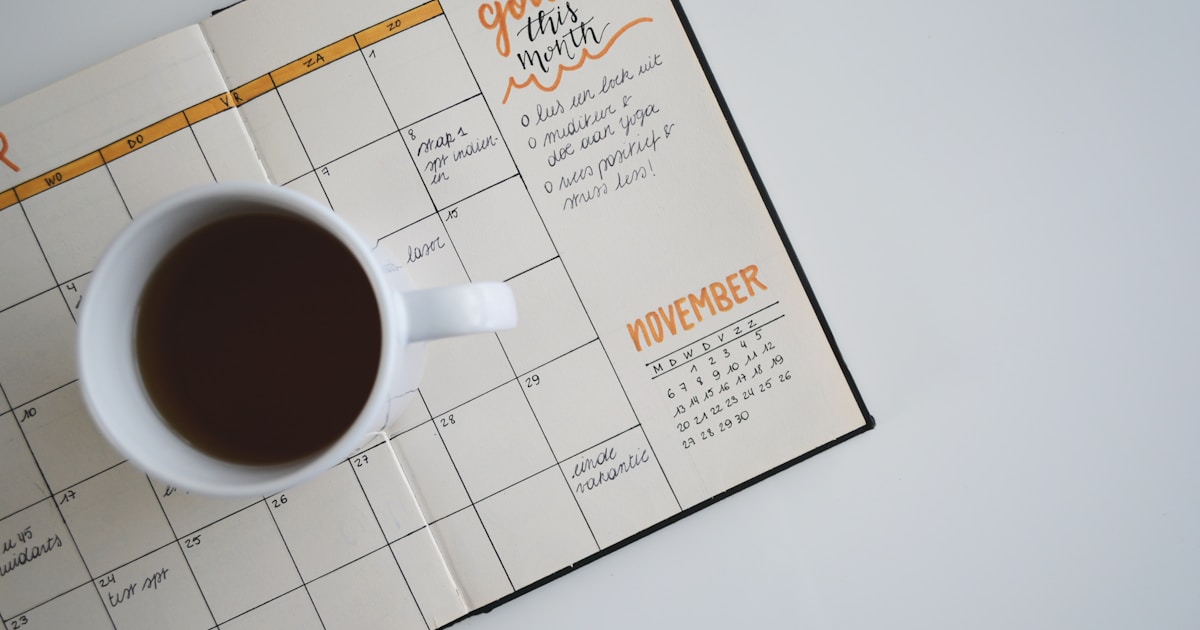
The Best Study Timetables for High School Students
Most study timetables fail before Wednesday. The problem isn't motivation - it's that they were built for an idealised life, not the real one. Here's how to build a schedule that actually holds up.
Most study timetables fail before they're even tested. Students build them on a Sunday afternoon with good intentions, schedule four hours of study every weekday, and abandon the whole thing by Wednesday. The problem usually isn't motivation. It's that the timetable was built for an idealised version of their life, not the real one.
Here's how to build a study schedule that actually holds up.
Before you block out study time, figure out what time genuinely exists in your week. Map out your fixed commitments first: school, sport, work, family commitments, travel time. What's left is your actual working budget. Not five hours every weekday. Whatever's actually there.
Most students overestimate how much free time they have, and then feel like failures when they can't stick to an ambitious schedule. A timetable that accounts for 60% of your free time and actually gets done is worth more than one that claims 90% and collapses.
When you study matters almost as much as how long you study. Most people have a window of two to three hours in the day where their concentration is strongest. For many students, that's after school before dinner, or in the mid-morning on weekends. Identify yours and protect it for your hardest subjects.
Don't save your best hours for passive tasks like rewriting notes or organising folders. That's procrastination with good optics. Use peak focus time for active work: past paper questions, recall sessions, problem sets.
Spread subjects across the week rather than dedicating entire days to one. Switching between subjects isn't inefficient; research on interleaving suggests it actually improves retention and problem-solving ability compared to blocking one topic at a time.
As exams approach, weight your time toward your weakest subjects, not your favourite ones. It's natural to gravitate toward what you're good at. It's also largely wasteful. Prioritise the gaps.
A rough approach that works well:
- Two to three subjects per day, one to two hours each
- Rotate so each subject gets roughly equal weekly exposure, adjusted for difficulty and upcoming deadlines
- Include at least one review session per subject per week on top of new material
Things will go wrong. You'll have a harder-than-expected assignment, a social commitment that runs long, or a day where focus just isn't there. If your schedule has no slack, one disruption cascades into the rest of the week.
Build one or two buffer sessions into each week. These are unallocated blocks you can use to catch up, not bonus free time. If you don't need them, great. If you do, they save the schedule.
A common mistake is only planning at the weekly level ("I'll do three hours of chemistry this week") without daily specificity. It's easy to defer vague plans.
Each Sunday, map out what you'll do in each session for the week ahead. Not just "study chemistry" but "do past paper questions on organic chemistry, check answers, review gaps." Specificity removes decision fatigue and makes it much harder to procrastinate.
Building a timetable by hand across six or seven subjects, with different assessment dates and varying difficulty levels, takes real effort and a lot of guesswork. Claritii is an AI-powered study coaching app that builds a personalised roadmap for you based on your subjects, upcoming assessments, and the hours you have available. It takes the planning work off your plate so you can spend that energy actually studying.
A timetable is not a contract. Review it at the end of each week. What worked? What didn't? Where did you fall behind and why? Adjust for the following week based on what actually happened, not what you hoped would happen.
The goal is a schedule that evolves with you across the term rather than one you write once and feel guilty about ignoring.
The Bottom Line
If all of this feels like too much, here's the minimum viable approach:
- Block out your fixed commitments.
- Identify your best focus window each day.
- Assign one to two subjects to that window on a rotating basis.
- Plan the specific task for each session the evening before.
- Review and adjust weekly.
That's it. Simple, consistent, and built around your real life.